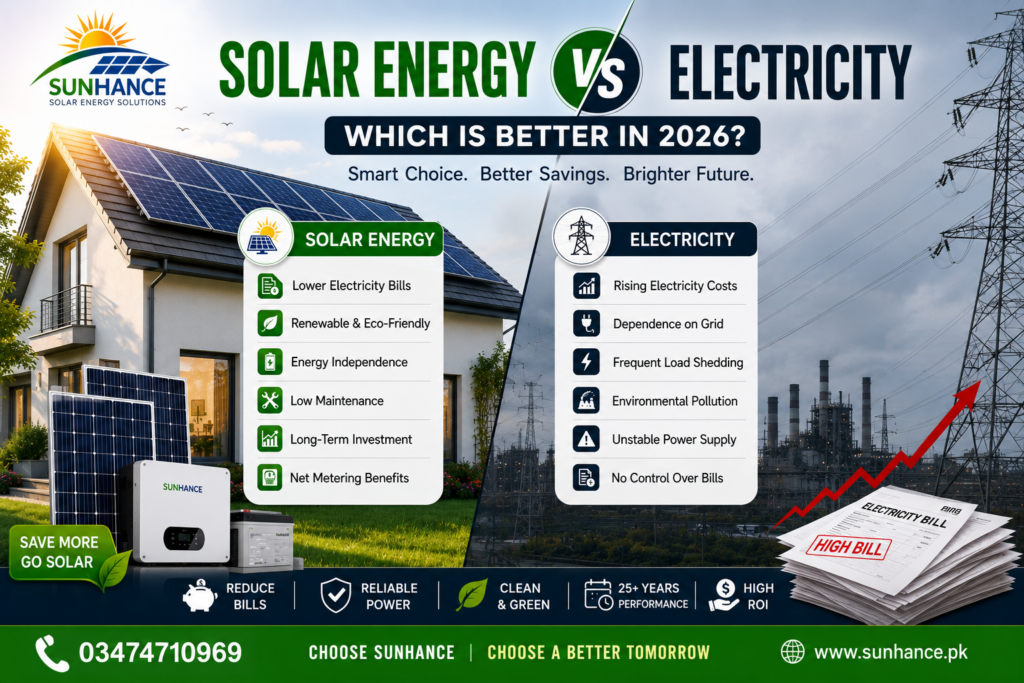
In 2026, the debate around solar energy vs electricity has become more important than ever, especially in Pakistan where electricity prices continue to rise. Homeowners and businesses are now searching for smarter and more affordable energy solutions to reduce monthly utility bills and gain energy independence.
Traditional electricity from the national grid has powered homes for decades, but the growing popularity of renewable energy has changed the market significantly. Solar power systems are now more efficient, affordable, and reliable than ever before. With advancements in hybrid solar inverters, high-efficiency solar panels, and net metering systems, solar energy has become a leading alternative.
This article compares solar energy and traditional electricity in terms of cost, reliability, environmental impact, maintenance, and long-term savings to help you decide which option is better in 2026.
What Is Traditional Electricity?
Traditional electricity is generated using fossil fuels such as coal, gas, and oil. Power plants produce electricity and distribute it through national grids to homes and businesses.
Advantages of Traditional Electricity
- Easily available in urban areas
- No upfront installation cost
- Suitable for immediate energy use
Disadvantages of Traditional Electricity
- Rising electricity prices in Pakistan
- Frequent load shedding
- Dependence on fuel imports
- Environmental pollution
- Unstable power supply
In Pakistan, electricity tariffs have increased significantly over the past few years, making it difficult for households and businesses to manage monthly expenses.
Read More: SolaX Max Hybrid Inverter Price in Pakistan 2026
What Is Solar Energy?
Solar energy is electricity generated from sunlight using solar panels. The system converts sunlight into usable electricity for homes, offices, factories, and commercial buildings.
A complete solar power system typically includes:
- Solar panels
- Hybrid or on-grid inverter
- Battery storage (optional)
- Mounting structure
- Net metering setup
Advantages of Solar Energy
- Lower electricity bills
- Renewable and eco-friendly
- Long-term investment
- Low maintenance costs
- Energy independence
Disadvantages of Solar Energy
- Initial installation cost
- Requires sunlight exposure
- Battery systems can increase cost
Despite the initial investment, solar energy provides major long-term savings and stable energy production.
Solar Energy vs Electricity: Cost Comparison in 2026
One of the biggest factors in choosing between solar energy and electricity is cost.
Electricity Costs in Pakistan
Electricity prices in Pakistan have reached record highs due to fuel adjustments, taxes, and inflation. Monthly bills continue to increase, especially during summer seasons when air conditioners consume more power.
For an average household:
- Monthly electricity bills can range from PKR 25,000 to PKR 80,000.
- Commercial users often pay much higher amounts.
Solar Energy Costs
Solar systems require upfront investment, but they significantly reduce monthly expenses.
Approximate 2026 solar installation prices:
- 5kW Solar System: PKR 700,000 – 900,000
- 10kW Solar System: PKR 1,200,000 – 1,600,000
Most homeowners recover their investment within 3–5 years through electricity savings.
Which Is More Affordable?
In the long run, solar energy is far more cost-effective than relying solely on grid electricity. Once installed, solar panels can produce electricity for 25 years or more.
Reliability and Power Availability
Traditional Electricity Challenges
Pakistan still faces:
- Load shedding
- Voltage fluctuations
- Grid failures
- High peak-hour rates
These issues negatively impact homes and businesses.
Solar Energy Reliability
Modern solar systems with hybrid inverters and batteries provide:
- Backup during outages
- Stable power supply
- Reduced dependency on the grid
Hybrid solar systems are especially popular because they combine solar power, batteries, and grid support for uninterrupted electricity.
Environmental Impact
Traditional Electricity and Pollution
Electricity generated from fossil fuels contributes heavily to:
- Carbon emissions
- Air pollution
- Climate change
Power plants also consume large amounts of natural resources.
Solar Energy and Sustainability
Solar energy is clean, renewable, and environmentally friendly. It reduces greenhouse gas emissions and supports sustainable living.
Benefits include:
- Zero fuel consumption
- Reduced carbon footprint
- Cleaner environment
- Renewable energy source
As global awareness about climate change grows, more people are switching to solar systems to support green energy initiatives.
Solar Panel Efficiency in 2026
Technology has improved dramatically in recent years. High-efficiency solar panels now generate more electricity using less space.
Modern Solar Features
- Higher energy conversion rates
- Better performance in cloudy weather
- Longer lifespan
- Smart monitoring systems
Premium solar brands now offer panels with efficiencies above 22%, making solar systems more powerful and reliable.
Net Metering Benefits in Pakistan
Net metering is one of the biggest reasons why solar energy is becoming more profitable.
What Is Net Metering?
Net metering allows users to send excess solar electricity back to the grid and receive credits on their electricity bills.
Benefits
- Lower monthly bills
- Faster return on investment
- Better energy utilization
- Opportunity to earn through surplus energy
In 2026, net metering continues to support residential and commercial solar adoption across Pakistan.
Residential Solar Solutions in Pakistan
Homeowners are increasingly searching for:
- residential solar installers near me
- affordable solar systems
- solar energy for homes
Residential solar systems help families:
- Reduce utility bills
- Avoid load shedding
- Increase property value
- Gain energy independence
A properly installed solar system can power:
- Air conditioners
- Refrigerators
- Fans
- Washing machines
- Water pumps
This makes solar energy a practical solution for modern households.
Commercial Solar Solutions for Businesses
Businesses in Pakistan are adopting solar systems to reduce operating costs.
Benefits for Businesses
- Lower energy expenses
- Improved productivity
- Protection against rising tariffs
- Positive environmental branding
Factories, offices, schools, and shopping malls are investing heavily in commercial solar systems to improve long-term profitability.
Why Choose SunHance for Solar Installation?
SunHance Official Website is one of the trusted solar companies in Pakistan, offering reliable residential and commercial solar solutions.
SunHance Services
- Solar panel installation
- Hybrid solar inverter solutions
- On-grid solar systems
- Net metering assistance
- Energy consultation
- Maintenance and support
SunHance focuses on delivering high-quality solar products with professional installation services tailored to customer needs.
Future of Solar Energy in Pakistan
The future of solar energy in Pakistan looks extremely promising. Government incentives, increasing electricity prices, and growing environmental awareness are driving rapid adoption.
Experts predict:
- More affordable solar technology
- Increased solar panel efficiency
- Expansion of net metering
- Higher investment in renewable energy
By 2030, solar energy is expected to become one of the country’s primary energy sources.
Which Is Better in 2026?
When comparing solar energy vs electricity, solar power clearly offers more advantages in 2026.
Solar Energy Wins Because:
- Lower long-term costs
- Reduced electricity bills
- Energy independence
- Eco-friendly solution
- Reliable backup options
- Long-lasting investment
Traditional electricity still plays an important role, but depending entirely on the grid is becoming increasingly expensive and unreliable.
Frequently Asked Questions
Is solar energy cheaper than electricity in Pakistan?
Yes. Solar energy significantly reduces monthly electricity bills and offers long-term savings.
How long do solar panels last?
Most solar panels last between 25–30 years with proper maintenance.
Is net metering available in Pakistan?
Yes. Net metering is widely available and helps users earn credits for excess electricity production.
What size solar system is best for a home?
A 5kW or 10kW system is suitable for most medium-sized households.
Can solar panels work during load shedding?
Yes, especially with hybrid inverters and battery backup systems.
Conclusion
The comparison between solar energy vs electricity clearly shows that solar power is the smarter and more sustainable choice in 2026. Rising electricity costs, frequent power outages, and environmental concerns are encouraging more homeowners and businesses to switch to solar systems.
With advanced solar technology, better financing options, and government support through net metering, solar energy has become a practical long-term investment in Pakistan.
If you are planning to reduce electricity bills and move toward clean energy, SunHance can help you choose the right solar solution for your home or business.