The demand for solar energy in Pakistan has increased rapidly in recent years due to rising electricity prices, frequent load shedding, and growing awareness about renewable energy. Homeowners and businesses are now shifting toward residential solar installation to reduce electricity bills and achieve energy independence.
In 2026, solar technology has become more affordable and efficient, making it the ideal time to invest in solar power. Whether you are looking for residential solar installers, high efficiency solar panels, or a complete solar solution, understanding the total solar energy cost in Pakistan is essential before making a decision.
This detailed guide explains every major factor that affects solar system pricing in Pakistan, including solar panels, inverters, batteries, installation, and net metering.
Average Solar System Prices in Pakistan 2026
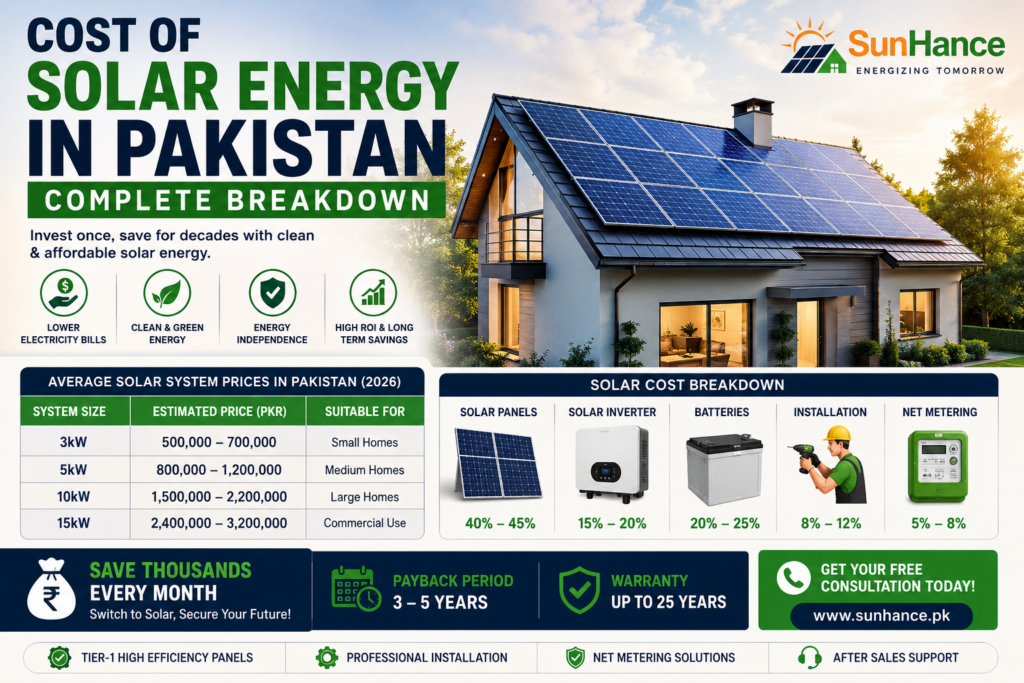
The cost of a solar system depends on system size, component quality, and installation type. Below is the estimated pricing for residential solar panel installation in Pakistan:
| System Size | Estimated Price (PKR) | Suitable For |
|---|---|---|
| 3kW | 500,000 – 700,000 | Small homes |
| 5kW | 800,000 – 1,200,000 | Medium homes |
| 10kW | 1,500,000 – 2,200,000 | Large homes |
| 15kW | 2,400,000 – 3,200,000 | Commercial use |
These prices usually include:
- Solar panels
- Inverter
- Mounting structure
- Wiring
- Installation
- Net metering documentation
Prices vary due to currency fluctuations and imported equipment costs.
Read More: Solar Energy vs Electricity: Which is Better in 2026?
Solar Cost Breakdown in Pakistan
1. Solar Panels Cost
Solar panels are the most important component of any solar system and contribute around 40–45% of the total cost. Tier-1 high efficiency solar panels from brands like Longi, Jinko, Canadian Solar, and JA Solar are widely used in Pakistan.
Average Solar Panel Rates
| Brand | Price Per Watt |
|---|---|
| Longi Solar | PKR 34–40 |
| Jinko Solar | PKR 30–34 |
| Canadian Solar | PKR 31–36 |
| JA Solar | PKR 29–32 |
High efficient solar panels generate more electricity and offer better long-term savings.
2. Solar Inverter Cost
The inverter converts DC electricity into usable AC electricity for your home. The type of inverter greatly impacts the total residential solar installation cost.
Common Inverter Types
On-Grid Inverter
- Lower cost
- Best for net metering
- No battery backup
Hybrid Inverter
- Supports batteries
- Ideal for load shedding
- More expensive
Off-Grid Inverter
- Fully independent
- Requires batteries
Estimated Inverter Prices
| Inverter Size | Estimated Price |
|---|---|
| 3kW | PKR 80,000 – 150,000 |
| 5kW Hybrid | PKR 150,000 – 320,000 |
| 10kW Hybrid | PKR 300,000 – 600,000 |
3. Battery Cost
Battery storage is optional for on-grid systems but necessary for backup during load shedding.
Lithium Battery Prices
| Battery Capacity | Estimated Price |
|---|---|
| 5kWh | PKR 400,000 – 550,000 |
| 10kWh | PKR 700,000 – 1,000,000 |
Lithium batteries last longer and provide better efficiency compared to lead-acid batteries.
4. Installation and Mounting Structure
Professional residential solar installers ensure proper system performance and safety. Installation costs include:
- Mounting structure
- DC/AC wiring
- Safety breakers
- Earthing
- Labor charges
Installation usually contributes 8–12% of the total system cost.
5. Net Metering Charges
Net metering allows homeowners to export excess electricity to the grid and receive credits on electricity bills.
Estimated Net Metering Cost
- PKR 140,000 – 160,000
Recent policy updates in Pakistan may also include licensing charges for larger systems.
Factors Affecting Solar Energy Cost in Pakistan
System Size
Larger systems cost more initially but provide better long-term savings.
Panel Efficiency
High efficiency solar panels produce more units using less roof space.
Battery Backup
Adding batteries significantly increases total cost.
Installation Quality
Choosing experienced residential solar installers near me ensures system reliability and safety.
Imported Equipment Rates
Solar equipment prices fluctuate with the USD exchange rate and import duties.
On-Grid vs Hybrid vs Off-Grid Systems
On-Grid Solar System
- Lowest installation cost
- Best ROI
- Ideal for urban areas
Hybrid Solar System
- Works with batteries
- Backup during load shedding
- Higher investment
Off-Grid Solar System
- Fully independent
- Best for remote locations
- Highest cost
Most homeowners in Pakistan prefer hybrid solar systems due to frequent power outages.
Is Solar Worth It in Pakistan?
Yes. Solar systems usually recover their investment within 3–5 years due to rising electricity prices.
Average Monthly Savings
| System Size | Estimated Monthly Savings |
|---|---|
| 3kW | PKR 10,000 – 15,000 |
| 5kW | PKR 15,000 – 25,000 |
| 10kW | PKR 30,000 – 50,000 |
Solar panels also increase property value and reduce dependency on WAPDA electricity.
Why Choose SunHance for Residential Solar Installation?
SunHance.pk provides premium residential solar installation services across Pakistan. The company offers:
- Tier-1 solar panels
- Advanced hybrid inverters
- Net metering solutions
- Professional installation
- Affordable pricing
- Long-term warranties
Whether you need residential solar installers near me or complete solar consultation, SunHance delivers reliable and efficient solar solutions tailored to your energy needs.
Latest Solar Market Trends in Pakistan 2026
The solar industry in Pakistan is rapidly evolving due to:
- Rising electricity tariffs
- Increased awareness of renewable energy
- Falling solar panel prices
- Growth in residential solar installation
- Improved net metering adoption
Industry experts believe 2026 will be a major growth year for solar energy in Pakistan.
FAQs
What is the average solar system price in Pakistan?
A residential solar system in Pakistan typically costs between PKR 500,000 and PKR 2,200,000 depending on system size and components.
Which solar system is best for homes?
Hybrid solar systems are ideal because they provide backup during load shedding.
How long do solar panels last?
Most high efficiency solar panels last 25–30 years.
Is net metering available in Pakistan?
Yes, net metering is available for approved on-grid systems.
How much can I save with solar energy?
Most homeowners save between PKR 15,000 and PKR 50,000 monthly depending on system size.
Conclusion
The cost of solar energy in Pakistan has become more affordable and practical in 2026. With increasing electricity prices and better solar technology, investing in residential solar installation is now a smart financial decision for homeowners and businesses.
Choosing experienced residential solar installers and using high efficiency solar panels ensures maximum energy savings and long-term performance. If you are planning to switch to solar energy, now is the perfect time to invest in a reliable and future-proof system.
For professional solar consultation and installation services, visit SunHance.pk today.